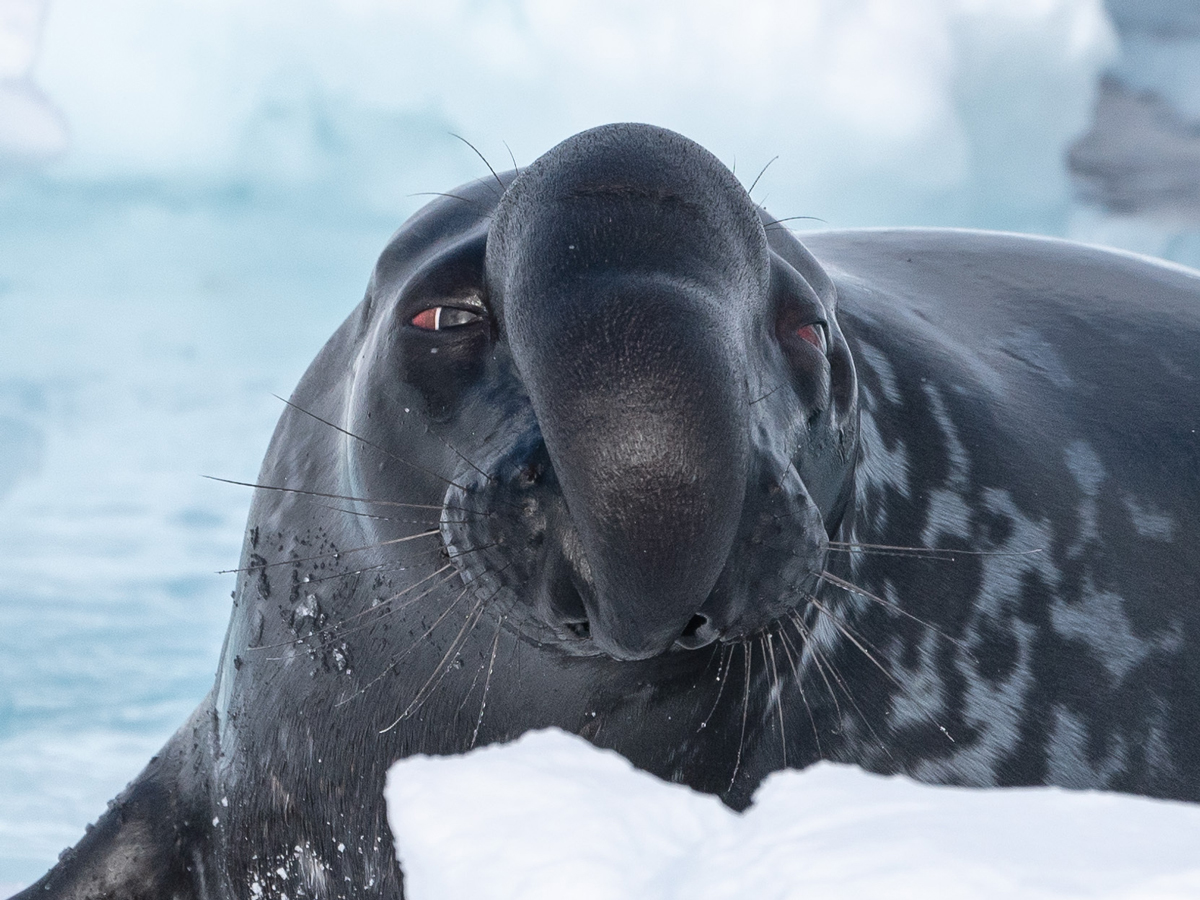
Photo by Justin Hofman, some rights reserved (CC BY-NC).
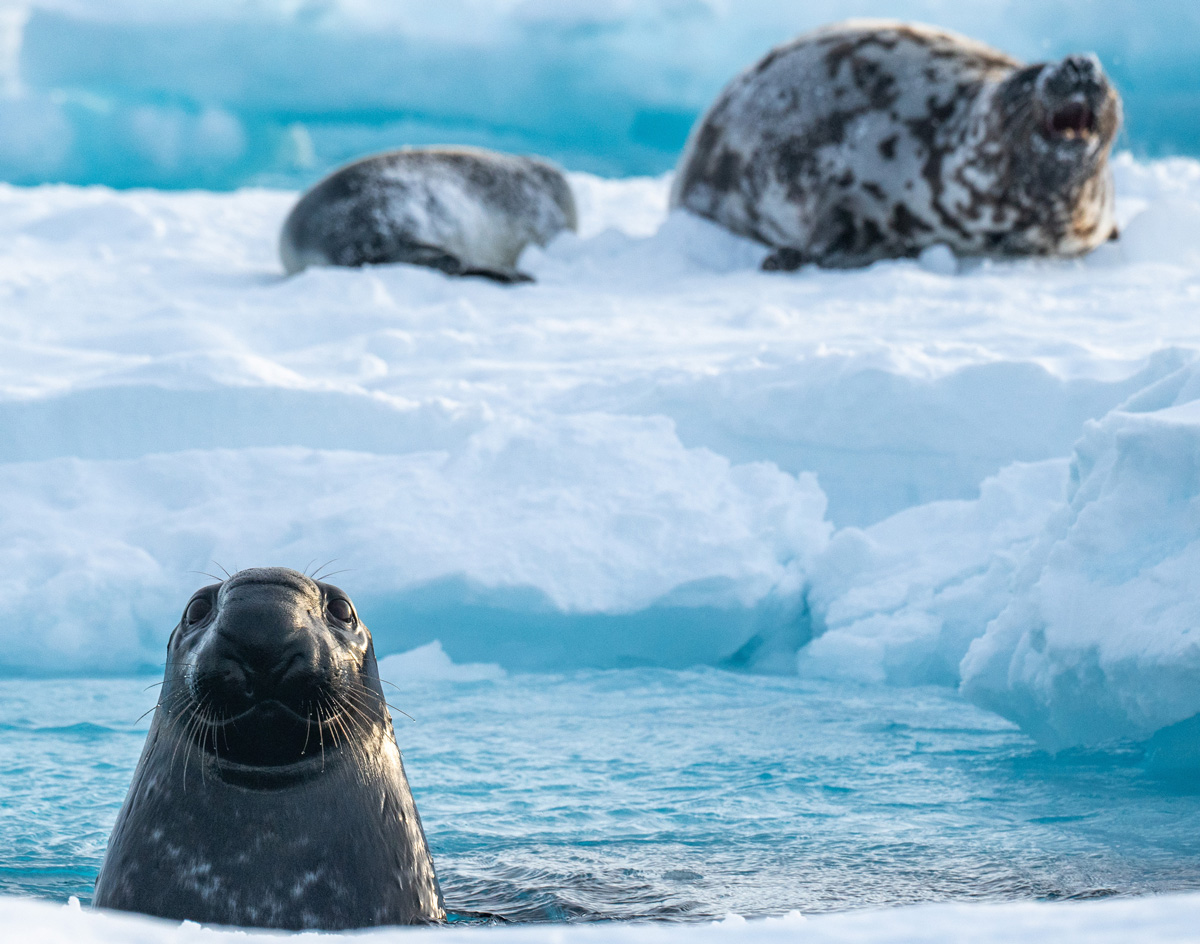
Photo by Justin Hofman, some rights reserved (CC BY-NC).
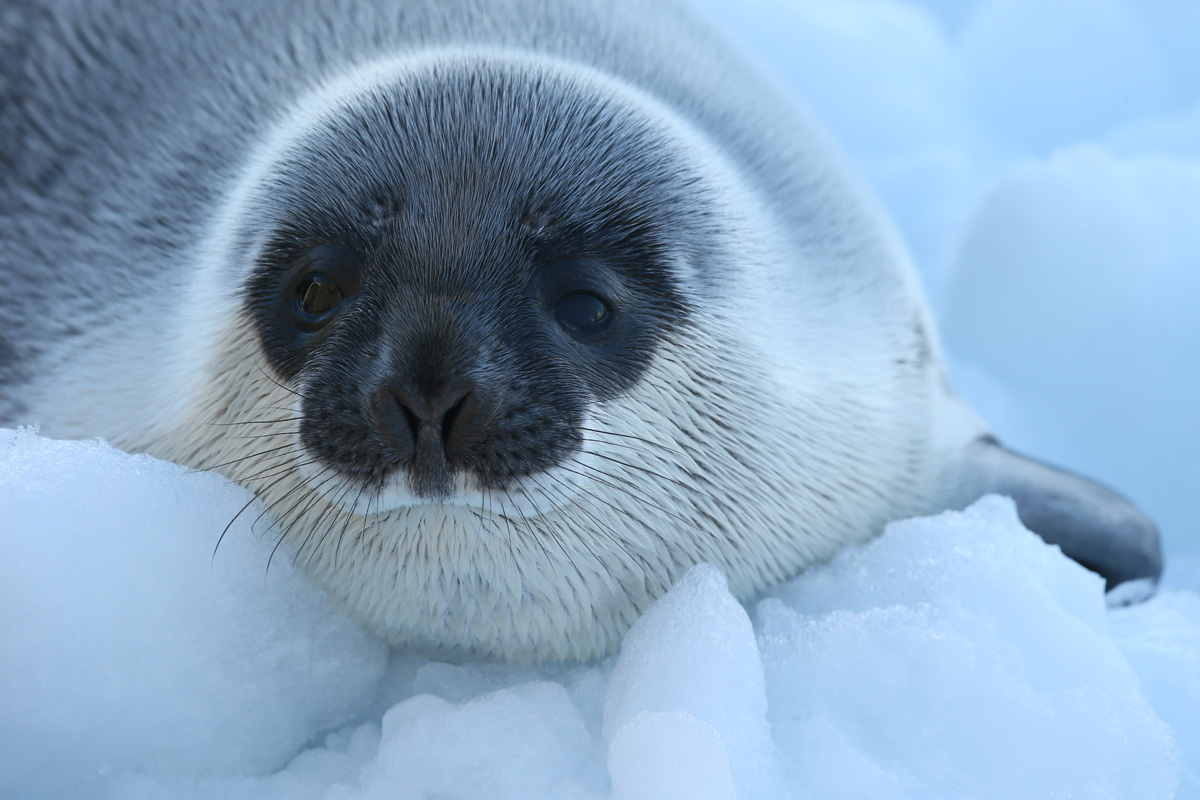
Photo by Ian L. Jones, some rights reserved (CC BY-NC).
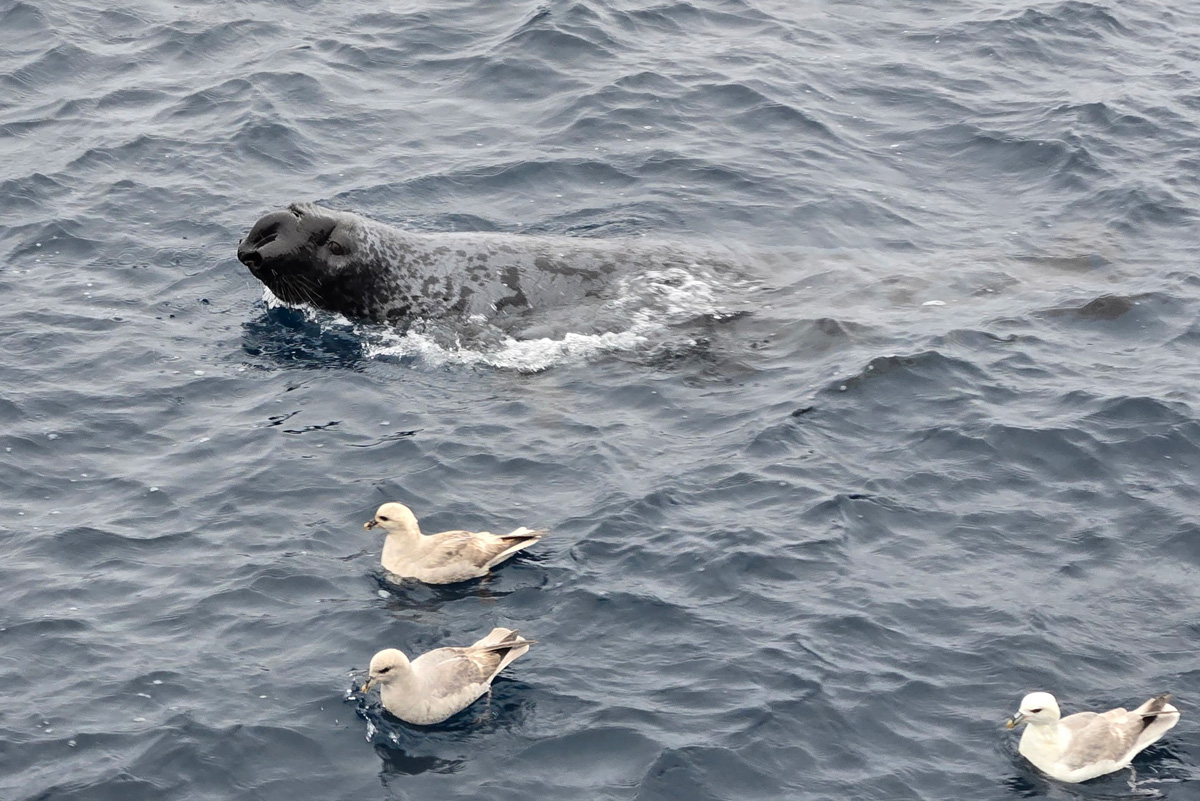
Cystophora cristata
Endangered (IUCN; assessed May 9, 2025; population trend, decreasing). In Canada, 'least concern' status (COSEWIC, 1986) to be reassessed in 2026.
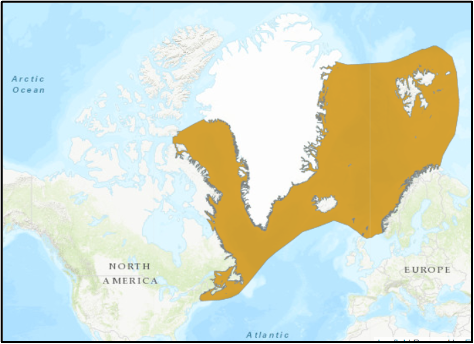
Like all seals, walruses and sea lions (and the related fur seals), the life of a hooded seal begins as a fertilized egg, in suspended animation, free-floating inside its mother’s uterus. Implantation of the embryo only begins some four months after copulation has occurred. The pup is born approximately twelve months after mating. It is generally thought that delayed implantation evolved to maximize the optimal timing of birthing pups with the almost immediate procreation of the next cohort, to be born the following year. Thus, the whelping of pups followed by reproduction of the adults is performed almost synchronously — and always on solid ice floes, in defined reproductive and whelping areas, within the broader distribution of this species. Once born, the pups imbibe their mother’s record-breaking fatty milk to double in weight just before moving onto solid food, as soon as four days after being born. Juvenile males do not grow their distinctive hoods until they are four years of age. Sexual maturity in is attained by their sixth year, upon which they start to compete for access to females. As with most pinnipeds, the males are much more massive than females (about 50% heavier), which, along with the sex-linked ornamentation of their hoods, defines hooded seals as presenting significant sexual dimorphism (whereby the different sexes show distinct morphological differences). The large size of males, and their ability to display via nasal sac extrusion, allows the more fit males to access, and guard, more females for exclusive sexual access. There exist four known breeding areas within the broader range of this species: in the Gulf of St Lawrence; an area just east of Newfoundland (called ‘the Front’); in the Davis Strait in the Canadian Arctic; and over near the island of Jan Mayan, in the Norwegian Arctic Ocean. Once seals have whelped and mated, they spend most of their time living offshore, hunting, sleeping and living. If lucky, hooded seals may live to be as old as 30 plus years in the wild.
Like most seals, natsivak represent an important component of Inuit cultural ties with the land and ocean. Natsivak are harvested for food, blubber and for their fur, which can be made into clothing with a high degree of insulation efficiency. However, no seals under the age of between 2–3 years (during which the juveniles retain their ‘blueback’ colouration) are now taken. Seals are usually harvested using precise, quick and humane tools, such as the hakapik, via a blow to the cranium. The harvesting of seals by Indigenous groups is a cultural axiom that has existed since the region was populated by people, at least 4000 years ago. Seals remain a vital, yet vulnerable, element of country food security (harvested animals and plants) in the Canadian Arctic. Seals (as well as some whales) may carry pathogens that may make their way into humans through consumption of infected meat (zoonoses). Hooded seals may be infected by a bacterium (Brucella pinnipedialis) that may cause the disease brucellosis. As such, monitoring for zoonotic agents is becoming an increasingly relevant area of interest for northern Indigenous communities (see walrus meat screening programs for Trichinella parasites in communities such as Kuujjuaq, Nunavik, for a good example).
The last census performed by the DFO was conducted in 2005, placing the numbers of hooded seals in the Canadian portion of its range (Northwest Atlantic population inclusive of St. Lawrence, Newfoundland and Davis Strait) at 595,500 animals, although these figures have wide margins of error. In 1996, this species was the second most abundant seal in the Northwest Atlantic. If these seals were so recently abundant, then why has the IUCN recently listed this species as Endangered, and why are COSEWIC looking to reevaluate it as a matter of urgency in 2026? The last Canadian survey was twenty years ago, during which time the Arctic ocean has further warmed, and the availability of sustainable ice floes upon which the seals exclusively breed, has shrank. Even without conducting a further census survey, logic dictates that populations will shrink in line with the dimunition of essential breeding habitat. Accordingly, as the IUCN assesses the global population, its most recent assessment - based on criteria that evaluate whether this global distribution is at risk of fragmenting or reducing (criterion A2a) – resulted in a classification of Endangered: the distribution is predicted to decline by 50% or more of its current range in the next 50 years. COSEWIC is likely to perform a similar analysis on the Northwest Atlantic population soon. Yet, the hooded seal is but one of six seal species harvested in the Northwest Atlantic region, and thus quotas can be amended to take into the account any change in the conservation status of hooded seals whilst maximizing Indigenous rights to harvest. In seals, infection by Brucella pinnipedialis may cause reduced fertility and other complications, which might exacerbate the impact of reduced breeding opportunities.
This species represents an example of the sudden emergence of a disparity in the conservation evaluation of a species with available high-resolution genetic data, including the availability of whole genome sequences, which, unfortunately for the hooded seal, is currently lacking. How quickly can whole genome sequences be generated, and – frankly – how useful would be such data be if the existential threat to hooded seals comes not from any preponderance of a lack of genetic diversity, but from the much more immediate threat of the permanent disappearance of an essential and indispensable keystone aspect of its entire being – namely, non-tethered ice floes off the coastline for reproduction?
What is apparent, is that this is a species that has not been well studied from a conservation genetics point of view. Its peculiar ice-based reproductive ecology and time spent out in the open ocean make for difficult sampling conditions. What recent genetic data does exist, based on nuclear genetic markers called microsatellites, suggests that there exists little, if any, differentiation between the West Arctic population off Jan Mayan and those of the Northwest Atlantic (corroborating a much earlier study based on even less informative genetic markers (allozyme protein variation and the presence (or absence) of enzyme cleavage sites present in DNA). However, the 2013 study was based on only 13 genetic markers. Compare this with more recent genomic studies of other organisms that employ as many as millions of markers, each derived from sequencing whole genomes. Vastly increasing our arsenal of genetic markers give us much more statistical power to identify cryptic populations, if, in fact, they do exist. The status quo, or null, hypothesis for the hooded seal, is that it consists of one large, panmictic (inter-breeding), population. This could be tested more robustly in the light of the new genomics. Additionally, markers distributed across the entire genome would allow conservationists to determine in any of the regional breeding aggregations show genomic signatures of localized adaptation. Perchance a change in breeding habitat preferences or tolerances brought about by diminishing ice availability during the breeding months. Such findings would greatly inform efforts to manage this species. Although relatively late in the day, as of April 2026, the hooded seal is on the list of 400 species to be sequenced for the Canada BioGenome Project.
Even so, sometimes environmental change is too great and too rapid, and/or there is no genomic variation in the right genes to influence adaptive evolution to save species, during times of great turmoil. Afterall, 99% of species that have ever existed have gone extinct. Humanity’s role in our current elevated levels of species extinction imbue us, rightfully, with a sense of guilt over the uncertain future of many species, especially those in disproportionately warming polar regions. Thus, the hooded seal’s greatest role in Arctic conservation biology may be that of a paragon to remind all of us that sometimes it is best for conservation practitioners and governments to preserve essential habitat rather than to seek the answers in the miasma of an unanalyzed genome, especially at potentially such a late stage in in a species’ history whose future longevity may be teetering on the precipice.
In other words, in the salutary lesson afforded by the current plight of the hooded seal, and by those organisms already driven extinct through climate-mediated habitat loss: prevention is better than the cure (especially if the cure is even yet to be discovered!). As long as there exists some ice for these seals to use during their breeding months, they still stand a chance.
© Arctic Institute of North America, University of Calgary
Site & Image Information