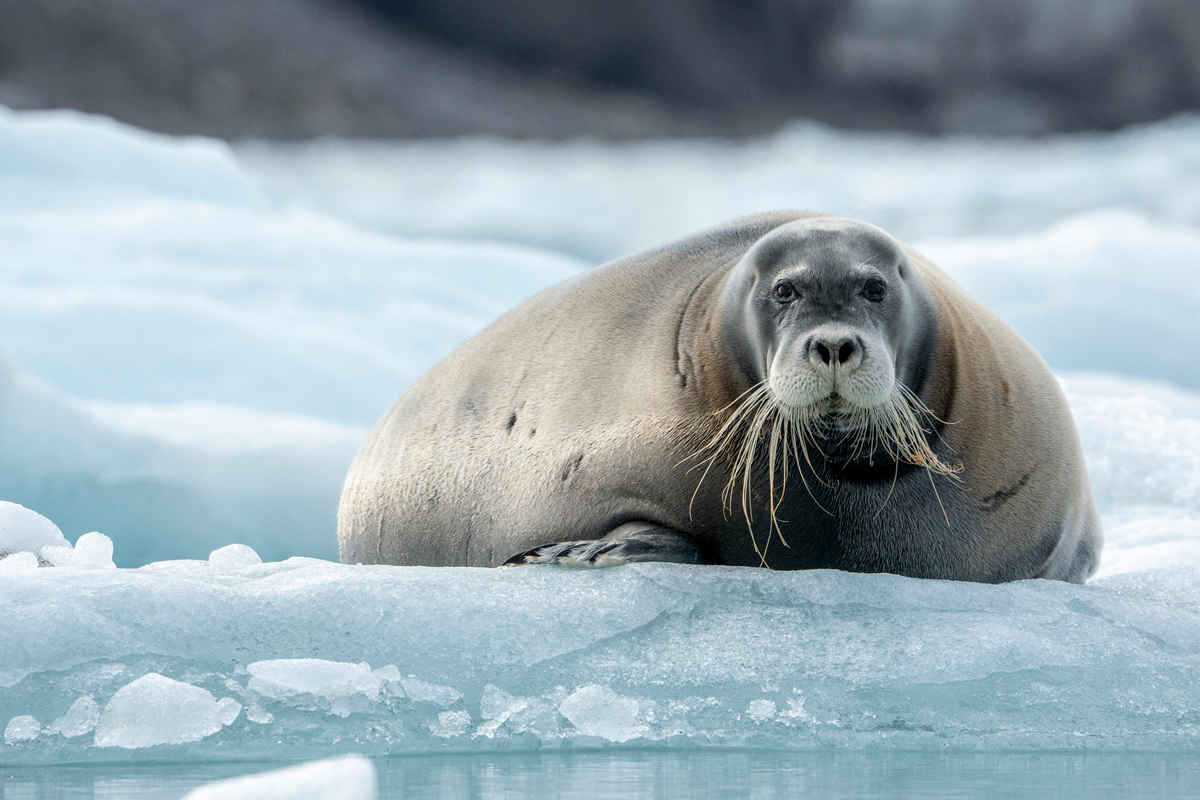
Photo by scienceco_sb, some rights reserved (CC BY-NC).
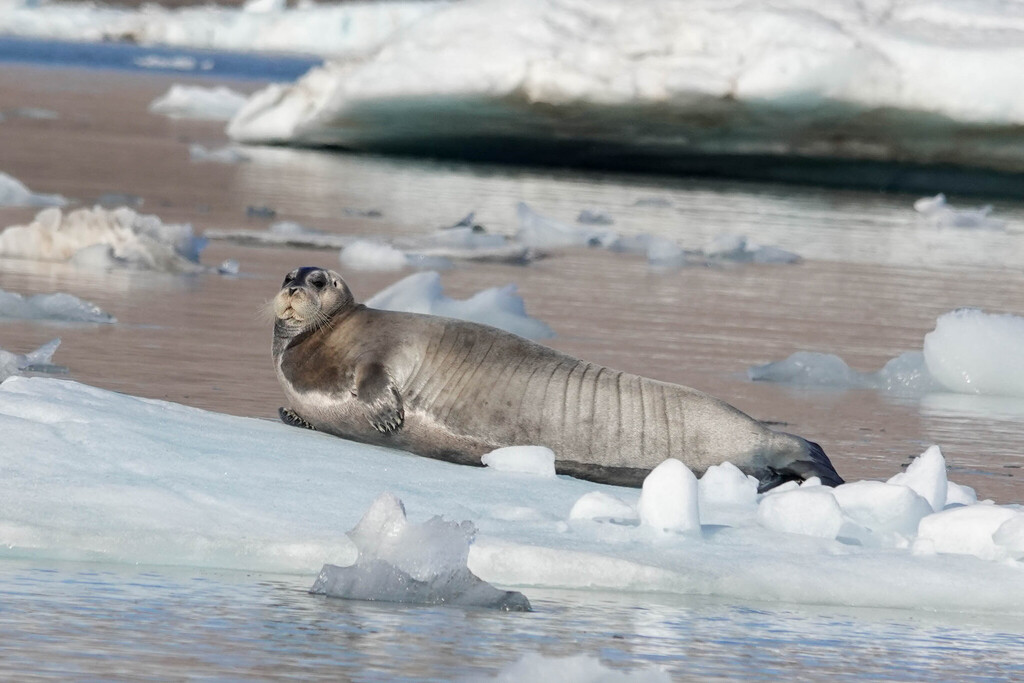
Photo by guillaumecalcagni, some rights reserved (CC BY-NC).
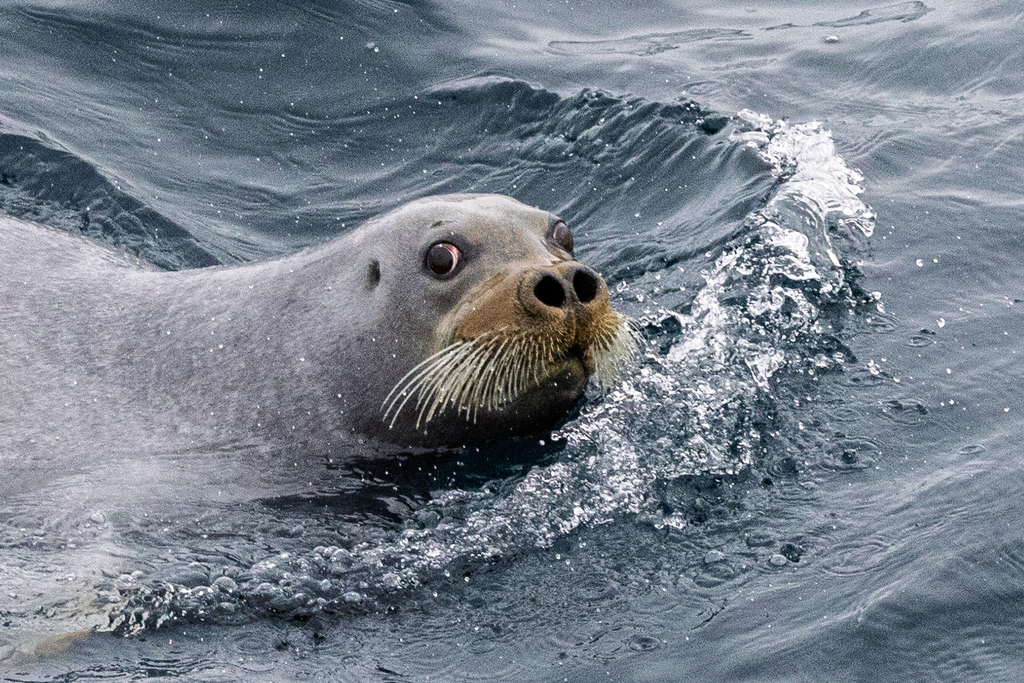
Photo by Mark Freemesser, some rights reserved (CC BY-NC).
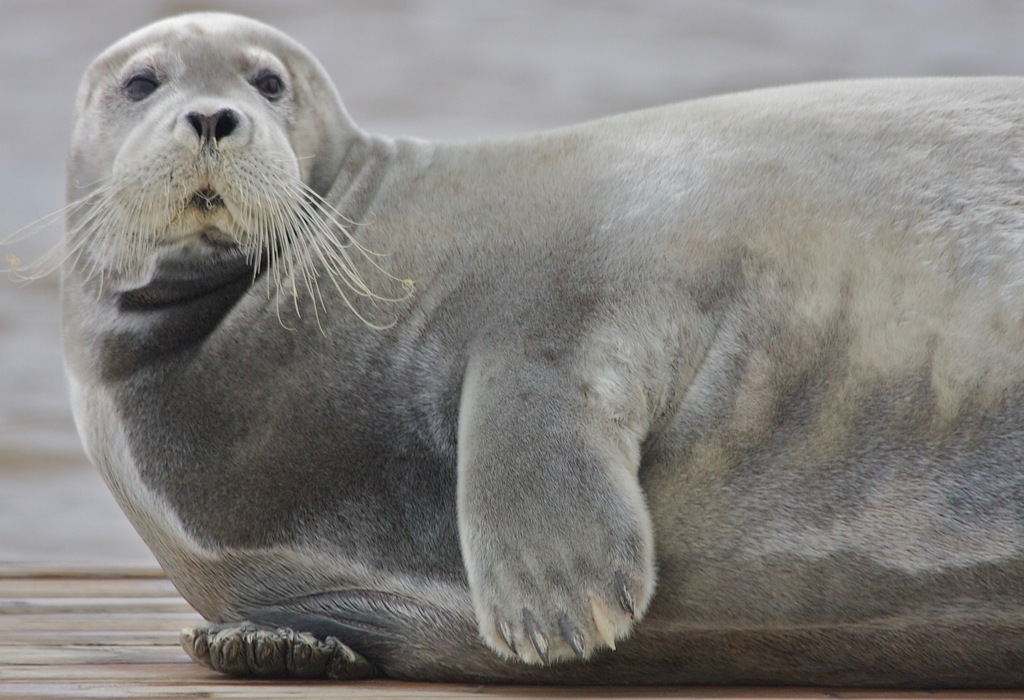
Photo by karloverman, some rights reserved (CC BY-NC).
Erignathus barbatus
Near threatened (IUCN; assessed September 15, 2024; population trend, unknown).
The distribution of the Bearded seal, although circumpolar in nature, is patchy compared to more ubiquitous Arctic seals such as the Ringed seal (see distribution map). In Canada, they can be found throughout the coastal Arctic as far south as northern Newfoundland. Like the Hooded seal, this is a species that depends on ice floes for much of its reproductive and behavioural ecology, although it may use shores on occasion. Bearded seals aggregate around ice floes in springtime, with males jostling for access to females through a combination of singing to attract them and to signal vitality, and guarding behaviour to ward off other males. Prior to breeding with the crooning males, females give birth to the pups conceived from the previous year. The pups are born with a precocious skillset that allows them to enter the water almost immediately. This is likely a defense against their main predator, the Polar bear. However, the pups are still dependent on their mother’s milk for three to four weeks before weaning. In the meantime, female bearded seals become receptive to the attentions of males. Mating occurs whilst the vulnerable pups are nearby, and a lot of juvenile mortality is caused by humongous males competing for access to females, or from females inadvertently crushing stray pups. Pups are lactated for around 24 days after which they can begin foraging, independent of parental care. By the end of their first week, pups can already dive to depths of 200m. As the pups leave and spend years at sea before attaining sexual maturity (females, 5–6 years; males, 6–7 years). Their mothers have already mated again, and like most seals, the fertilized egg is suspended before implantation some weeks after the conception event (see account of the Hooded seal). At sea, Bearded seals forage on the sea floor for the majority of their prey (they are benthic predators), gorging on crustaceans, bivalves and fishes amongst the seabed florae. They still make use of the sea ice for haul-outs and moulting. If lucky, a Bearded seal may reach the ripe old age of 25. However, to do so they must avoid predation by humans, polar bears, Greenland sharks and Orcas, amongst other large marine predators.
Pinnipeds (marine mammals that include the seals, sealions and walruses) represent a significant portion of the food security upon which many Inuit communities (and other Indigenous peoples in Canda) depend in the Arctic. Their meat provides nourishment and nutrition, their blubber provides the oil which fuel Inuit lamps, and their valuable pelts and fur provides materials with a high insulation capacity for use as clothing and for protective coverings. Not only that, but the act of the hunting of seals is a deeply spiritual activity that helps forge binds that tie within communities. Moreover, the sharing and distribution of seal meat after the hunt further solidifies the seal hunt as a touchstone of community relationships with the land and sea, and the bounty that it provides. Although current populations of Bearded seal are patchier than the more ubiquitous Harp seals, for example, this species still provides communities with invaluable resources for subsisting in the High Arctic, especially their skins. Bearded seal skins serve many cosmetic and functional roles in Inuit society. The skins are made into protective (coats) and thermal (underwear and gloves) clothing, straps, and covers for transportation. The ability of Bearded seal skin to insulate human skin along with its hydrophobic properties, make it an ideal material for many aspects of Inuit life. In Greenland Inuit, Bearded seal meat, unless dried or fermented for human consumption, was used to feed sleighing dogs.
Apart from materialistic aspects of Bearded seal harvesting, the seal itself is imbued with spiritual characteristics from some Inuit. It is considered a harbinger of spring in the arctic, as the males burst out into sonorous song before other species of seal arrive on the ice floes from the oceanic feeding grounds. Somewhat conversely, the bearded seal plays a role as a wintertime bogey figure at New Year celebrations, representing the harsh threats that the Arctic winter can throw at communities. This species also plays a role in numerous other Inuit rituals, and its symbolic importance is expanded upon in an open access and detailed account by Sonne (2019) (see references).
The IUCN has recently re-assessed the status of the Bearded seal as being ‘near threatened’. Until the mid-1990s, the Canadian federal government designated this species as not-at-risk. However, in 2007 it was adjudged that there was not enough population-level data to make a concrete conservation status designation, thereby describing this species as data-deficient. As of 2026, the Committee on the Status of Endangered Wildlife in Canada (COSEWIC) lists this species, along with the Hooded seal (see Hooded seal species-in-focus) and Harp seal, as being high-priority marine mammals for a new conservation assessment (COSEWIC, 2026). The reasoning behind renewed focus is largely driven by the expected changes to the availability of ice in the current distribution of Arctic seals species that depend on the ice for breeding, whelping, moulting and feeding. If the projected loss of permanent summer sea ice follows recent historical trends (Environment and Climate Change Canada, 2024), then this may have a devastating impact on the numbers of Arctic ice-dependent seal populations, even if current numbers may be relatively healthy. If numbers dwindle to well below contemporary levels, then not only will the seals themselves suffer loss of habitat and concomitant breeding opportunities, but Inuit communities may lose a significant source of nutritious country food and a vital element of community cultural wellbeing via a reduction in the number of productive seal hunts.
Like many large Arctic marine mammals that depend significantly on sea ice as part of their essential conditions for a productive life, the projected loss of permanent sea ice in the Arctic ocean is a very pressing concern for the future of a significant component of Arctic marine food security for Arctic communities, as well as for the species themselves. Fragmentation and disappearance of essential habitat can leave indelible marks in the genomes of marine mammals. By looking into the genomes of extant populations, we are essentially looking at the imprint of past hydrogeological-adjacent processes such as population fluxes and population-level responses to rapidly changing environments – such as those experienced by Arctic populations during the climatic fluctuations of the Pleistocene epoch – will write their effects into the constitution of past genomes that are inherited by modern populations. A good example of this class of population-level effect is known as the founder effect, coined by the famous ornithologist and evolutionary biologist Ernst Mayr during the mid 20th century, in which a small subset of a larger population is isolated from the wider parental population, resulting in a ‘founding’ population characterised by lower or divergent levels of genetic variation from its parental or sibling populations, which may be further exacerbated due to the twin impacts of inbreeding and genetic drift (random loss or fixation of genetic variants (alleles) due to limited breeding combinations of genes in populations, and subsequent natural selection. For many marine mammals, warm interglacial periods, such as what we are experiencing now after the last Ice Age, represent significant stressors for population connectivity and maintenance of large pools of genomic variation. In our troubled times, this is further exacerbated by anthropogenic (human-induced) climate change, adding further stress. However, reconstructing past demographic history from surveys of modern levels of genomic diversity may be complex and requires high levels of genome sequencing data. Still, we can look into genomes and study the impacts of past climatic fluxes to make predictions of the future of extant populations based on standing levels of genomic variation present today within them. Whole genome sequencing of populations allows us to do exactly this.
In 2025, McCarthy and colleagues published a novel survey of whole genome variation within the pan-Arctic distribution of Bearded seals. Given the relative lack of genetic studies of Bearded seals prior, this paper is a touchstone for future efforts to characterise and study the genomes of ice-obligate seals in the vulnerable Arctic marine realm. The authors sequenced the genomes of 70 individual seals, from across its range, including from its two putative subspecies (Atlantic (Erignathus barbatus barbatus) and Pacific (Erignathus barbatus nauticus)). At a macro level, the authors found deep genomic divergences between the two subspecies, supporting their designation as such. Indeed, the split of these two lineages was related to the impact of the glaciation period before the last ice age (around 200 thousand years ago), in which the Pacific and Atlantic populations were isolated by vast polar ice sheets precluding effective migration between the two groups as open sea migration routes connecting east-west were presumably lost. Prior to this split, the parent species showed signs of gradual loss of genomic variation from 5 million years ago to 2 million years ago (the extent of the climatically cool and dry Pliocene epoch that ended with the formation of more extensive glaciation in higher latitude regions of the world (ca. 3 million years ago)), followed by an increase until the point at which the subspecies came into existence (the start of the Pleistocene epoch, characterized by more profound climatic fluxes between ice ages (glacial maxima) and interglacials (glacial minima)). Ultimately, one such flux is consistent with the timing of the species splitting into two subspecies, as indicated by the patterning of genomic variation. Since their sundering 200 thousand years ago, the modern genome data has further uncovered significant amounts of finescale genetic structuring within both the Atlantic and the Pacific lineages, resulting in the putative designation of three genomic units in the Atlantic and two in the Pacific according to a clustering analysis. The Atlantic populations: Canada-West Greenland, East Greenland-Svalbard, and Northwest Greenland (Melville Bay), are followed in turn by the Pacific groups: Sea of Okhotsk and Bering-Chukchi-Beaufort Seas. These designations are also largely supported by a genetic admixture analysis, too. Levels of genetic diversity (measured by the amount of heterozygosity – a term that measures the number of genetic variants in a population at any singly genetic locus (gene) on a chromosome) vary between regions. Levels are higher in the Pacific subspecies compared to the Atlantic, and especially so in the Sea of Okhotsk sub-population. The authors conjecture that sea ice dynamics in the past impacted levels of direction of gene flow (breeding migrations) resulting in a regional genetically distinct genomic landscape within this species.
What can we do with this information? Early days, however, we can superimpose genetically distinct units on maps of current sea ice distribution and predictive patterns to identify specific subpopulations under immediate threat of habitat erosion; and also identify populations that might be showing signs of adaption to the new sea ice regime and other corollaries of climatic upheaval. Thus, by triaging which populations need the most expedited attention, we can better allocate mitigation or management decisions. Indeed, McCarthy et al, found some evidence for selection acting on genomic regions located on four chromosomes (numbers 3, 7, 8 and 10), with implications for how seals are adapting to different environmental conditions. Some of the genes involved deal with hypoxia (low oxygen levels), which is a crucial trait when it comes to foraging. Those seals better adapted to holding their beath for longer, can consume more food, convert this to growth and reproduction, and confer a fitness advantage to their offspring. What other tells, will the genomes of Bearded seals reveal in the fullness of time? The work, has in reality, only just begun.
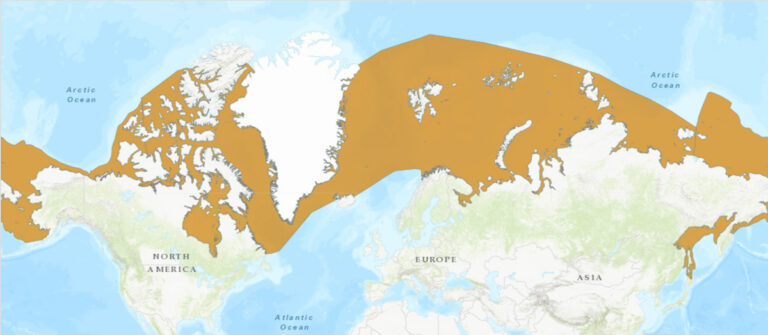
© Arctic Institute of North America, University of Calgary
Site & Image Information